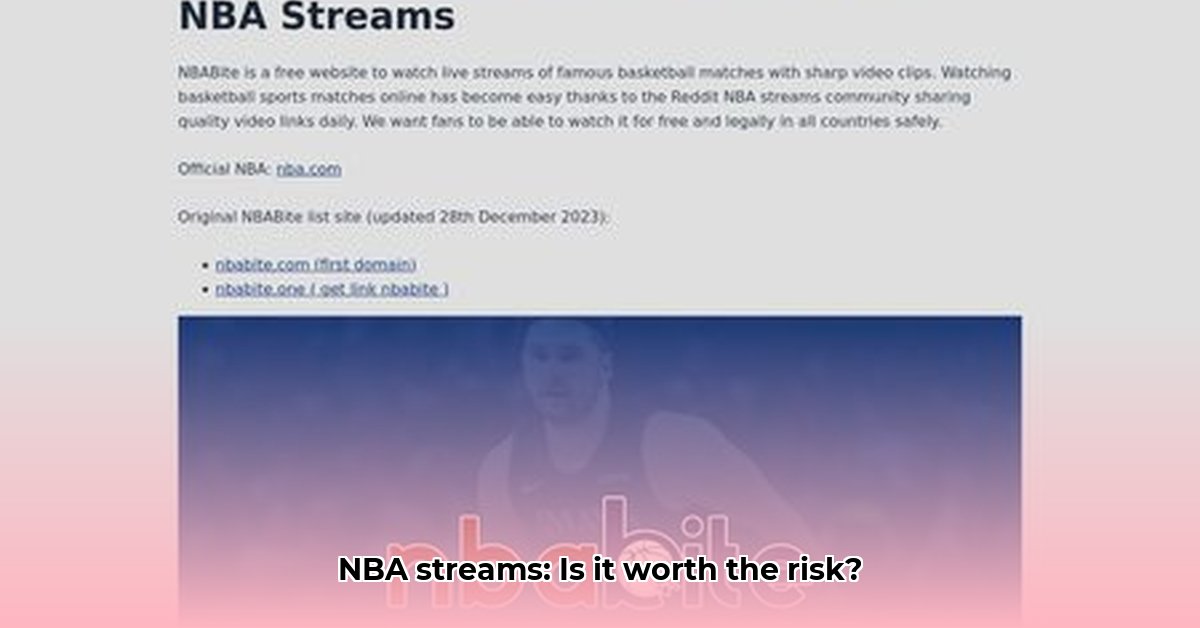
NBA Bite IO: Risks of Illegal Streaming
The proliferation of websites offering free, illegal streams of NBA games, such as NBA Bite IO (similar to the now-defunct Crackstreams), presents a significant challenge to the NBA and the broader sports broadcasting industry. These platforms leverage readily available technology to circumvent copyright protections, distributing pirated content and evading law enforcement efforts. This article examines the nature of this threat, its consequences, and potential solutions.
Understanding the Damage
Websites like NBA Bite IO inflict considerable damage on multiple fronts. The direct theft of NBA games represents a substantial loss of revenue for the league, broadcasters, and individual teams. This lost income negatively impacts player salaries, team investments, and the overall financial well-being of the sport. The availability of free, pirated streams also discourages paying customers, further exacerbating the financial impact and hindering the growth of the legitimate streaming market.
The Technology and Legal Challenges
The technical infrastructure behind platforms like NBA Bite IO is often sophisticated, designed to evade detection and takedown efforts. Techniques employed might include using various methods to mask the site's online location, making it difficult to identify and pursue legal action against those responsible. This necessitates continuous adaptation and vigilance from authorities and rights holders.
The complex legal landscape surrounding online piracy further complicates matters. International cooperation is crucial for effectively tracking and prosecuting those operating these websites, particularly those operating across multiple jurisdictions. Existing laws often struggle to keep pace with rapid technological advancements, creating loopholes exploited by illegal streaming operations.
User Perspectives and Ethical Considerations
While free streaming may seem appealing to many users, it's vital to recognize the legal and ethical implications. Utilizing these platforms directly undermines the efforts of those who create and distribute the content, compromising the fairness and financial stability of the sports industry. The potential risks—including legal penalties and exposure to malware—must be weighed against the perceived benefits of free access.
Combating the Threat: A Collaborative Approach
Addressing this challenge requires a coordinated response involving the NBA, other sports leagues, internet service providers (ISPs), and law enforcement. Effective strategies include:
Enhanced DMCA Takedown Procedures: Swift and precise takedown notices are essential for the rapid removal of illegal streams.
Improved ISP Collaboration: ISPs play a crucial role in blocking access to pirate websites. Increased collaboration is necessary for effective enforcement.
Advanced Anti-Piracy Technology: Investing in innovative technologies is critical for staying ahead of illicit content distribution strategies.
Stronger International Legal Frameworks: International cooperation is paramount to effectively combating cross-border piracy.
The Future of Sports Viewing
The battle against illegal streaming platforms like NBA Bite IO is ongoing. The industry's response will be decisive in shaping the long-term health and sustainability of legitimate sports streaming. The future likely involves a combination of technological advancements, refined legal frameworks, and impactful public awareness campaigns to deter piracy.
Information Gaps and Future Research
Significant gaps exist in our understanding of the scale and impact of websites like NBA Bite IO. Data on user demographics, revenue generation, and precise technical methods are often scarce. This limits comprehensive analysis and highlights the need for further research. Some experts suggest that the true extent of the problem is substantially larger than current estimates.
Key Takeaways:
- Illegal sports streaming inflicts substantial financial harm on the sports industry.
- Existing legal frameworks, such as the DMCA, are proving inadequate to address the problem effectively.
- The growing involvement of major streaming platforms in sports broadcasting may catalyze legislative changes.
- Collaboration among leagues, platforms, consumers, and governments is crucial for effective solutions.
- Technological advancements alone are insufficient; education and affordable, legal alternatives are also essential.